Bonanza vs Plinko: My Personal Bankroll Split
Bonanza Megaways and Plinko are completely different games, and for a long time I treated them as if they lived in separate worlds. Bonanza was the “serious” session, Plinko was a way to kill ten minutes. Then I noticed something: the weeks when I lost the most money weren’t the weeks when one game went badly. They were the weeks when I played both without a plan and let one bleed into the other.
So I started splitting my bankroll deliberately. Here’s the system I’ve settled into, and why it works for me.
Why a split makes sense at all
The two games have different shapes. Bonanza is slow, volatile, and rewards patience — a single session can run an hour or more with very little happening. Plinko is fast and self-contained, with a clear beginning and end on every drop. If I play them back to back without separating the money, a cold Bonanza session turns into an impatient Plinko session, and impatient Plinko is just a faster way to lose.
Splitting the bankroll forces me to decide, before I start, which game I’m actually playing and how much of my money is exposed to it.
My rough split
I don’t use exact percentages, because my bankroll changes from month to month. But the ratio stays fairly consistent.
- About two-thirds to Bonanza. It’s my main game, and it needs a larger buffer because the volatility means long dry spells. A small Bonanza bankroll disappears before the game has a chance to do anything.
- About one-third to Plinko. This is the portion I can spend quickly without hurting my main session. It’s also the portion that absorbs my urge to play when I shouldn’t be touching Bonanza.
The important part isn’t the exact numbers. It’s that the two pots don’t touch. If Plinko goes badly, I don’t reach into the Bonanza pot to “win it back.” If Bonanza goes badly, I don’t drain the Plinko pot chasing the loss. Each game lives or dies on its own budget.
How the sessions differ
My Bonanza sessions are longer and more deliberate. I set a stake I can hold for a few hundred spins, keep Bonus Buy as an occasional option rather than a habit, and stop when the budget is gone. Those sessions are planned in advance.
Plinko sessions are short and flexible. I set a number of drops and a flat stake, play them out, and stop. Ten or fifteen minutes is typical. The split in money reflects the split in time — Bonanza gets the long evenings, Plinko gets the gaps.
What I’ve stopped doing is playing Plinko immediately after a losing Bonanza session. That combination is where I’ve made my worst decisions, because Plinko feels cheap and fast and that’s exactly the wrong mood to be in.
Why this works better on anonymous platforms
Managing two pots is easier when the platform doesn’t add friction. I want to move between games without a review flagging my account, and I want withdrawals to be straightforward when I decide to take money off the table rather than move it between games.
That’s part of why I look for sites where I can play casino without kyc checks getting in the way. It’s not a dramatic privacy stance — it’s practical. My sessions are frequent and small, and I don’t want each one to generate paperwork. When I’m comparing platforms, verification policy is one of the first things I check, right alongside withdrawal limits.
What I’ve learned from splitting the bankroll
The biggest change is that I lose less often in the way that actually hurts. A bad Plinko night now costs me a third of the budget at most, and it doesn’t touch my Bonanza money. A brutal Bonanza session doesn’t send me running to Plinko to recover, because the Plinko pot has its own rules.
The second change is that both games are more fun. Bonanza feels like the main event again instead of a warm-up for something else, and Plinko is a proper short session rather than a panic button.
If you play both games, try separating the money before you separate the sessions. It’s a small piece of planning that changes how the whole month goes.
Reviews
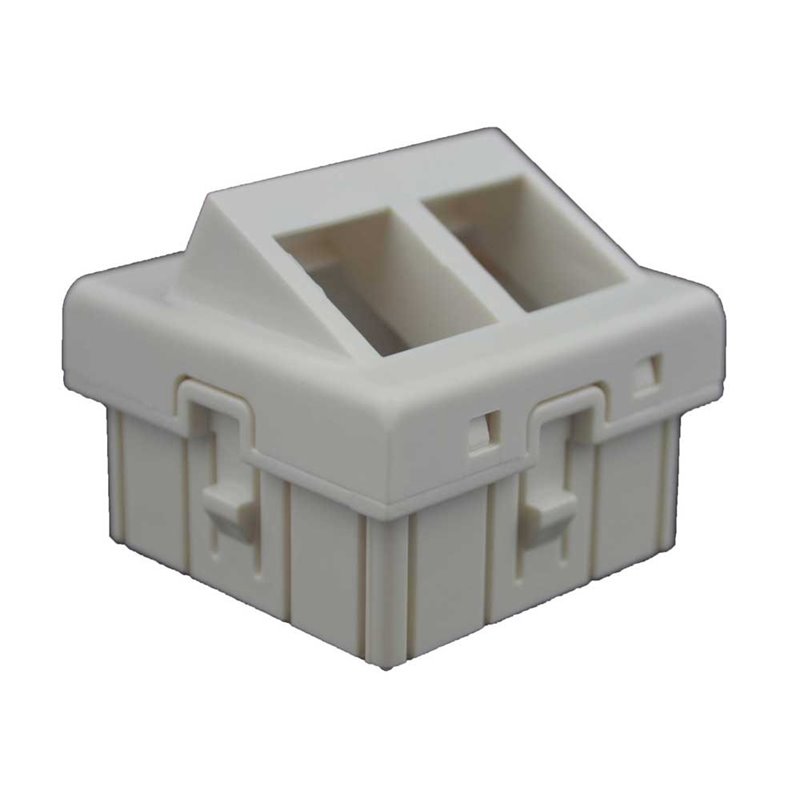
Cableaway Double Data Mount Module is a Great way to mount into any skirting duct floor box or even a wall plate it is fast and easy.